- Antipasti
- Bella Italia
- Dessert
- Drinks
- Favorite Italian recipes
- Main courses
- Pasta
- Pizza
- Side dishes and salad
- Tips & Knowledge
Coffee variations: Espresso, cappuccino, latte macchiato & co.
Difference between caffè and coffee Word has probably got around by now that when you ask for a caffè in Italy, you don’t get the same thing as when you order a coffee in Germany. Nevertheless, to be on the safe side: if you ask for a caffè in Italy, you get an espresso. If […]
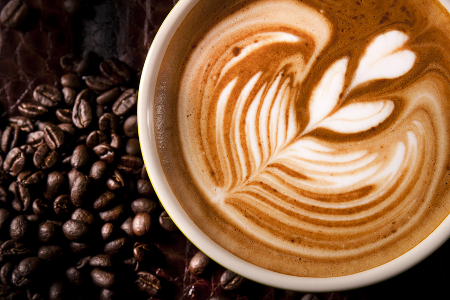
Difference between caffè and coffee
Word has probably got around by now that when you ask for a caffè in Italy, you don’t get the same thing as when you order a coffee in Germany. Nevertheless, to be on the safe side: if you ask for a caffè in Italy, you get an espresso. If you want a black coffee in Italy, you order a caffè lungo, which has more water running through the espresso machine. The Americano is similar, but the water is poured into the espresso afterwards.
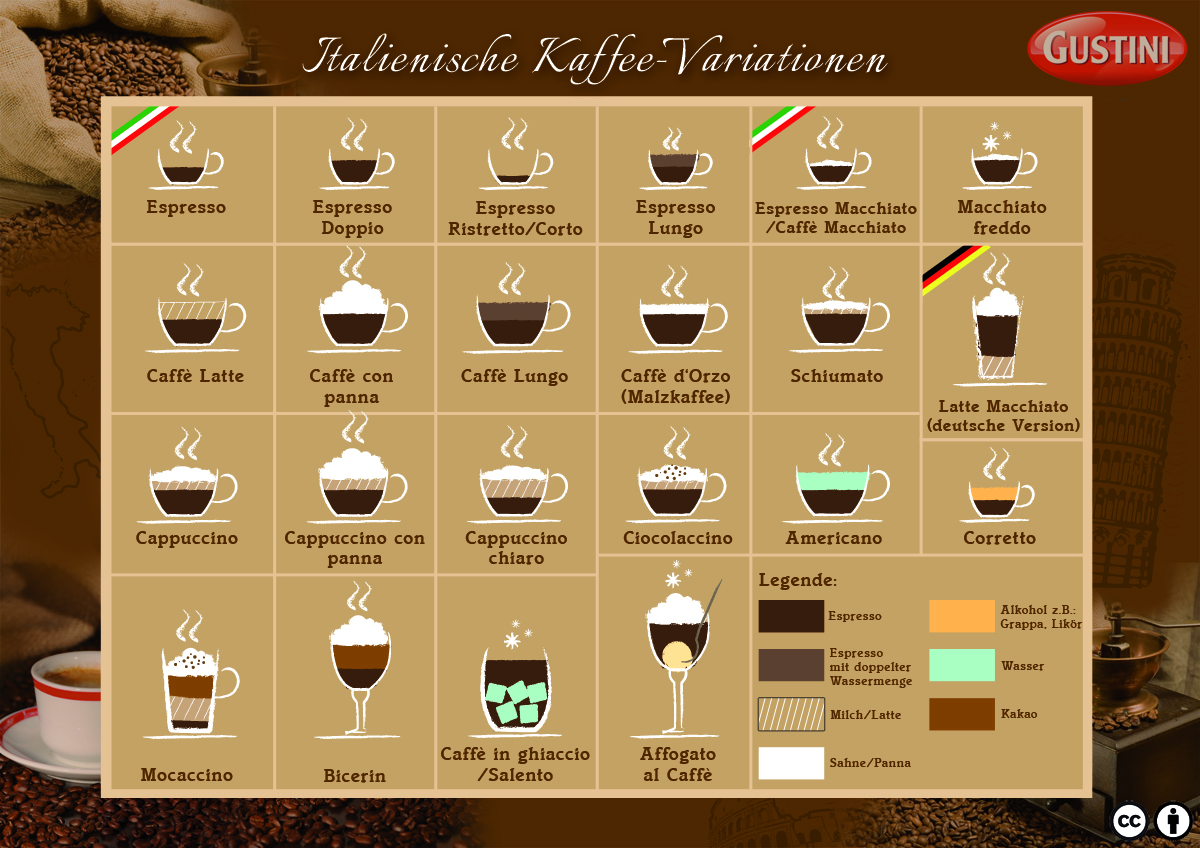
Italian coffee varieties
More Italian coffee variations
Other Italian coffee specialties are more popular in certain regions or have other restrictions on consumption. Cappuccino, for example, is only drunk at breakfast in Italy. Throughout the rest of the day, Italians traditionally prefer to enjoy espresso. Espresso macchiato (actually stained coffee), i.e. espresso with milk, is drunk more by women. Ristretto is a very strong espresso with very little liquid. It is mainly drunk in the south of Italy and is not very common outside Italy. In the north of Italy, more precisely in the mountains, corretto is very popular – an espresso with a shot of grappa. Salento coffee is a coffee with ice.

Also popular: Latte art
Preparation of the coffee variations
Espresso Doppio is a double espresso. An espresso ristretto/corto is prepared with less water than an espresso; an espresso lungo with more. An espresso macchiato/caffè macchiato consists of an espresso and frothed milk and is served in an espresso cup, while a macchiato freddo consists of cold coffee and frothed milk. In a caffè latte, on the other hand, the milk is not frothed and it is served in a cappuccino cup. In caffè con panna, the milk is replaced by cream. Caffè d’Orzo is a coffee made from grain; this can be barley, spelt or something else. A schiumato is served in a larger cup than an espresso macchiato. For a German latte macchiato, milk, espresso and cream are layered. A cappuccino is made with espresso, a little milk and milk foam. In a cappuccino con panna, the milk is again replaced by cream. A cappuccino chiaro (=light cappuccino) is made with more milk. A ciocolaccino is refined with chocolate sprinkles on top of the milk foam. An Americano is basically a diluted espresso, where the espresso is brewed in a cappuccino cup and the cup is filled with hot water. A corretto is served in an espresso cup with a shot of grappa or other liqueur. A mocacchino is served in a tall glass and consists of layers of espresso, milk, cocoa and cream, garnished with chocolate sprinkles. The bicerin is particularly popular in Turin and consists of a mixture of espresso and cocoa with a dollop of cream. Caffè ghiaccio is an iced coffee with ice cubes, a Salento and an Affoghato are served with a scoop of vanilla ice cream.
New coffee creations
The enjoyment of coffee continues to grow in popularity. It’s unbelievable how many coffee variations baristas and resourceful business people have come up with. And yet there aren’t that many ingredients: Espresso, water, milk, cream and possibly grappa. But thanks to the different preparation methods and serving options, there are countless variations in which coffee is offered. Caffè decaffeinato, Caffè in vetro (= espresso in a glass), Caffè schiumato (with warm foamed milk), Mocaccino, Caffè shakerato (with ice from the shaker, served in a martini glass), Melange Viennese, Caffè turco, Irish coffee, Caffè franchese (from the coffee press), Caffè al limone (with Sorrento lemon), Caffè latte, Latte macchiato (which doesn’t actually exist in Italy) etc. And then you can find them in the relevant coffee houses with various syrups and milk variations.
We want to spread the word about Italian coffee culture online. Therefore, the infographic (top image) of this article is licensed under a Creative Commons Attribution 4.0 International License.
High-resolution downloads of the infographic can be found here.





Want to share your thoughts? We're excited to hear what you think of the article. Tell us about your ideas, tips or questions! Leave a comment and share your knowledge with the community. Your opinion counts.
Write a comment